Pain Pattern
A sudden, severe pain in the aftermath of a fall, accident, or any kind of impact on the body may indicate a bone fracture.
Timely Care, Precise Healing, & Safe Return To Movement
Fractures Occur When A Bone Breaks Due To Stress, Such As In A Fall Or Accident. Bones Are The Foundation Of Our Support System, So Even A Minor Fracture Can Disrupt The Balance Of Life. Seeking Orthopaedic Care As Soon As Possible Will Help The Bone Heal In The Right Position And Allow You To Move Your Joints Freely Again.
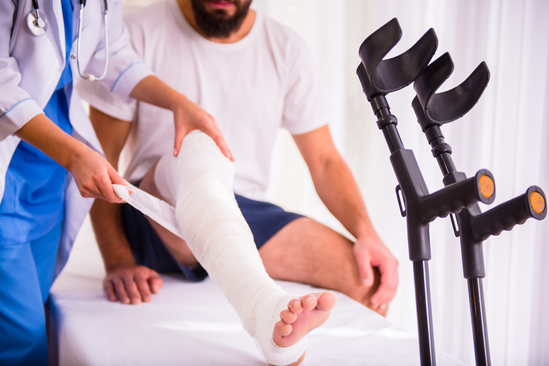
Fractures usually make their presence known through unmistakable and pressing symptoms
A sudden, severe pain in the aftermath of a fall, accident, or any kind of impact on the body may indicate a bone fracture.
Swelling, bruising, a noticeable deformity, or difficulty moving the affected body part are definite indicators that you require immediate medical attention.
Difficulty or inability to put weight on the leg (or arm) or severe numbness, deformity, or an open wound at the site of injury are serious warning signs that necessitate immediate orthopaedic care in case of a leg injury.
Early stabilisation of the affected area is essential to safeguard surrounding tissues.
First, we examine the nature of the fracture, the cause of the injury, and the degree of stability of the fracture. This helps establish the tempo of treatment required and the type of treatment that needs to be done.
We assess factors such as the bone quality, the distance of the bone displacement, the soft tissue injury, and the complexity of healing. These factors guide our treatment approach.
X-rays are taken immediately to determine the nature of the fracture and the degree of alignment of the bones. If it is a complicated case, we may employ advanced imaging techniques to assess the degree of displacement and joint involvement.
The treatment plan may include immobilisation or surgical fixation, followed by a rehabilitation program aimed at restoring strength and function in a safe manner.
Fractures should be assessed promptly to avoid alignment issues, delayed healing, or neurovascular complications.
No. Many stable fractures heal without surgery, while complex fractures need operative fixation for best outcome.
Early diagnosis improves outcomes. Speak with Dr. Kuldeep Malik for the right next step.
Start Treatment Plan