Pain Pattern
Sudden pain from running, jumping, twisting, or direct contact may be an indication of ligament tears, tendon injuries, or joint damage.
Precision Diagnosis, Structured Recovery, & Confident Return To Sport By Dr. Kuldeep Malik
Injuries Related To Ligaments, Tendons, Muscles, And Joints In Sports Require Immediate Attention From Specialists. What Appears To Be A Trivial Pull Can Actually Be A Sign Of Serious Damage, And If Not Treated Properly, The Injury Can Lead To Chronic Instability, Reduced Performance, Or Severe Pain.
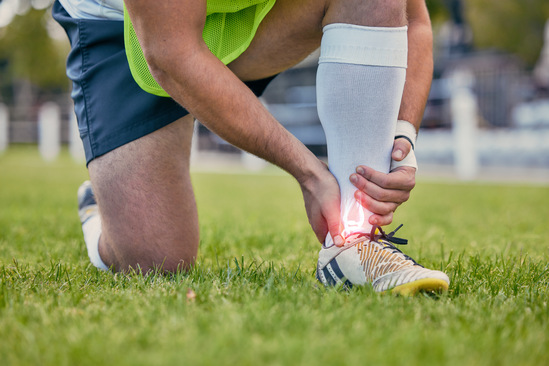
Sports injuries tend to appear suddenly with obvious symptoms. If there are warning signs, it is important to seek immediate medical attention.
Sudden pain from running, jumping, twisting, or direct contact may be an indication of ligament tears, tendon injuries, or joint damage.
A loose sensation, catching, or a joint that gives way repeatedly is a sign of compromised support.
Swelling and weakness that begin to impact performance or normal movement indicate that healing should be monitored by a professional.
Red flags that indicate an immediate need for medical attention include being unable to continue with activity immediately after injury, which could be a sign of a severe tear or break.
In sports medicine, each injury has a predictable, sport-related course from evaluation through recovery.
Experts examine the mechanism of injury, identifying which tissues—ligaments, tendons, cartilage, or muscles—are affected. The mechanism of injury can guide a correct diagnosis.
We classify the injury based on the amount of tissue damage, the degree of stability, and the amount of function impaired. This determines whether physical therapy alone will suffice or if surgery is required.
A complete physical examination, combined with X-rays or MRI imaging studies when necessary, confirms the amount of ligament or tendon damage and reveals other potential problems that may be lurking.
The treatment plan is individualised based on the sport, performance requirements, and recovery time. The goal is to safely return to play with restored strength and coordination.
Many mild to moderate injuries recover with rehab, but complete tears may need surgical stabilization.
As early as possible. Delayed management can increase swelling, weakness, and risk of chronic instability.
Early diagnosis improves outcomes. Speak with Dr. Kuldeep Malik for the right next step.
Start Treatment Plan