Pain Pattern
When you experience groin pain or pain on the outer side of your hip while walking or climbing stairs, it could indicate problems with your joints or irritated tendons.
Accurate Diagnosis, Targeted Relief, & Lasting Mobility
Hip Pain May Begin Innocently As A Slight Ache And Then Progress Into A Sonething That Makes It Difficult To Walk, Sit, Climb Stairs, Or Even Sleep. Because The Hip Joint Supports The Body’s Weight And Facilitates Movement, Neglecting The Pain May Have A Negative Impact On The Posture And Overall Quality Of Life.
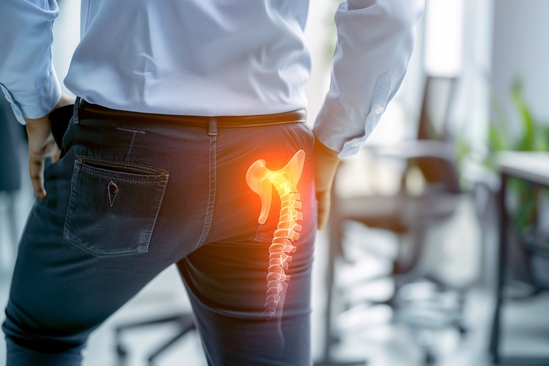
Certain patterns of hip pain indicate that you need to visit an orthopaedic specialist sooner rather than later.
When you experience groin pain or pain on the outer side of your hip while walking or climbing stairs, it could indicate problems with your joints or irritated tendons.
Hip stiffness after prolonged sitting and reduced flexibility of the hip joint often indicate the onset of degenerative conditions.
If you begin to limp or find it painful to stand for long periods, it could indicate that your balance function is already compromised.
The most important warning sign is hip pain that interferes with your sleep patterns or regularly affects your daily activities.
Effective management begins with a comprehensive and systematic evaluation.
We examine mechanical limitations, inflammation, degeneration, and muscle imbalances in a comprehensive clinical examination.
We determine the degree of motion limitation and grade it accordingly. This will help us determine whether purely conservative management will suffice or if more invasive procedures are required.
Imaging studies, when required, help to confirm the physical examination findings. X-rays or MRI can help identify structural problems such as cartilage loss, joint space narrowing, or post-injury changes.
The management plan combines pain management, motion restoration, and functional goals. The plan is not only aimed at relieving pain but also at maintaining joint mobility.
No. Hip pain can occur at any age due to sports injury, inflammation, impingement, or degeneration.
When pain remains severe despite non-surgical care and daily activity is significantly affected.
Early diagnosis improves outcomes. Speak with Dr. Kuldeep Malik for the right next step.
Start Treatment Plan