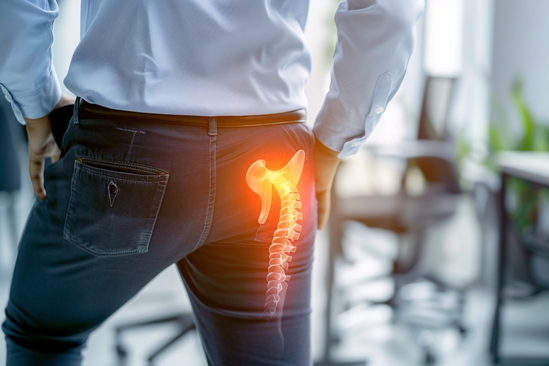
Hip pain is a typical problem among orthopaedic patients and can occur in any age group but more commonly affects elderly patients. Being a weight-bearing joint, the hip joint has an extremely important function in the body by allowing us to walk and move around. No matter whether it is about walking up and down stairs, sitting, lying, running, or exercising, hips always play a vital role in our activities.
Although temporary and intermittent discomfort associated with physical activity is not uncommon, chronic hip pain should never be taken lightly. Not only can it greatly affect mobility and independence, but hip pain may also cause other serious complications if not addressed promptly.
Understanding the Hip Joint
The hip joint is a ball-and-socket joint, in which the head of the femur bone connects with the acetabulum in the pelvis. The function of the joint is to provide flexible movements in different directions, as well as support the body's weight.
Normal cartilage serves as an anti-friction coating on the surface of the joint to provide smooth and effortless movements. Any damage to this cartilage or its surrounding areas may cause pain and stiffness.
The hip joint is subjected to a lot of stress, injuries, and disorders because of the constant pressure exerted on it.
Common Causes of Hip Pain in Adults
Several health problems can cause hip pain. Determining the actual cause is necessary for selecting the right therapy.
Osteoarthritis
It is the most widespread cause of hip pain, especially for people who have passed the age of 50 years.
In this disease, the cartilage that surrounds the joint begins to erode over time. This leads to pain and stiffness caused by rubbing of bones as the cushion between them breaks down.
Symptoms usually get worse gradually without timely treatment.
Rheumatoid Arthritis
Unlike osteoarthritis, this problem is not caused by aging but happens due to autoimmune response where one's body starts attacking itself.
This means a person might experience:
- Joint pain on a regular basis
- Stiffness after waking up in the morning
- Swelling and inflammation
- Destruction of the joints
The problem can involve one or both sides.
Hip Injuries
Another frequent cause of hip pain comes from injuries.
These include:
- Hip fracture
- Muscle strain
- Ligament damage
- Damage to tendons
- Labrum tears
Any injury such as falling, getting hit by a car, playing sports, and even abrupt movements might cause harm to the hip and cause pain.
Bursitis
Bursitis is an inflammatory disease characterised by the inflammation of small, fluid-filled sacs known as bursae that prevent friction around joints.
Hip bursitis results in symptoms including:
- Hip pain on the side of the hip joint
- Tenderness
- Discomfort upon lying down on the affected side
- Walking difficulties
Avascular Necrosis
Avascular necrosis is characterised by the insufficient supply of blood to the hip bones which leads to their weakening and degeneration.
Untreated avascular necrosis results in a severe joint collapse and impaired functionality.
Lifestyle Contributing Factors
Several other factors associated with lifestyles can be contributing to hip pain development.
They include:
Excessive Body Weight
Overweight subjects are likely to increase pressure on their hip joints, speeding up the process of cartilage degeneration and leading to arthritis.
Sedentary Lifestyle
Inactive lifestyle can negatively affect hip joint functionality since muscles in these areas may weaken and become less stable.
Workplace Hazards
Occupations requiring repetitive use of hips may cause hip joint deterioration due to overwork.
Incorrect Postures
Improper biomechanics of moving can have a detrimental effect on the health of hips.
Common Symptoms of Hip Problems
There are some general symptoms that can suggest hip problems and require orthopaedic intervention.
Chronic Hip Pain
Pain can be located either in the hip, groin, thigh, buttock area, or even extend to the knee joint.
Discomfort can be continuous or exacerbated when performing any physical activities.
Joint Rigidity
Stiffness in the morning and after sitting for an extended time is quite a common issue.
This means that the patient may find it hard to move his joint during the initial moments of mobility.
Trouble Moving Around
Impairments in walking represent one of the most common symptoms of hip conditions.
Among them include:
- Limping
- Slower pace when walking
- Reduced stride length
- Problems when walking for a distance
- Feeling tired when moving
Restrictions in Joint Mobility
Simple actions like bending, sitting cross-legged, wearing shoes, or entering a car might pose a challenge for patients.
Joint Swelling
There could be localised swelling, tenderness, and warmth caused by inflammatory processes affecting the joint.
Pain with Physical Activities
Hip pain can manifest itself during:
- Walking upstairs
- Prolonged standing
- Getting up from a chair
- Physical exercise
- Sleeping on the affected side
When Should You Consult an Orthopaedic Specialist?
Whereas temporary soreness may get better with sufficient rest, the need for seeking medical advice arises in situations where:
- There is chronic pain for several weeks.
- There is difficulty walking.
- Activities get affected.
- There is persistent stiffness.
- The pain affects sleeping.
- The remedies being used at home are not working.
- There is a fresh injury.
Seeking early professional assistance will ensure that the cause of the problem is determined before any permanent damage occurs.
How Hip Pain Is Diagnosed
Diagnosis is crucial for appropriate treatment.
Generally, an orthopedist starts with discussing the patient's health background, symptoms, and level of physical activity.
Physical Examination
The physician examines the:
- Movements of joints
- Degree of flexibility
- Muscles' power
- Gait
- Places of pain and inflammation
Tests
Diagnostic imaging aids in visualising the condition of the hip joint and its surroundings.
They may consist of:
- X-ray examination
- MRI
- CT scan
- Ultrasound testing
Lab Tests
In some cases, it may be needed to carry out blood tests to diagnose any diseases that cause joint pain.
Treatment Options for Hip Pain
The type of treatment will depend on the reason for the occurrence, the degree to which the individual suffers from the symptoms, and the general state of the person's health.
Most people try out non-invasive forms of treatment first before opting for surgery.
Non-Surgical Treatment Options
Medications
Painkillers and anti-inflammatory drugs may be prescribed for reducing pain and improving body function.
Physiotherapy
A proper physiotherapy regimen may help build up muscle strength, increase flexibility, improve balance, and lessen pressure exerted on the hip joint.
Lifestyle Changes
Small changes in one’s lifestyle might have a significant effect on symptoms.
These include:
- Maintaining weight
- Low-impact exercises
- Exercise modification
- Better posture
Assistive Devices
Walking devices such as canes and walking sticks may prove effective in lessening stress on the affected joint.
Injections
Some injections might be administered for decreasing inflammation.
Surgical Treatment Options
In cases where conservative methods prove ineffective or joint damage is substantial, surgical intervention may be required.
Arthroscopy
In cases where the patient presents particular conditions like a torn labrum, or impingement in the joint, arthroscopy may be performed.
Surgery for Hip Fractures
Fractured bones require surgical intervention to stabilise the joint and restore function.
Total Hip Arthroplasty
Advanced stages of osteoarthritis can be surgically treated by total hip replacement, providing pain relief and improved mobility.
With this procedure, damaged parts of the joint are removed and replaced with artificial ones that facilitate its proper functioning.
Thanks to developments in this procedure, excellent results have been achieved, allowing many patients to lead an active life.
The Importance of Early Treatment
One of the most essential things when trying to effectively deal with hip pain is treating the problem early on.
Early diagnosis and treatment can help with:
- Slowing the development of the disease
- Relieving pain and inflammation
- Maintaining joint functionality
- Increasing mobility
- Preventing complications
- Avoiding complicated surgery
Neglecting the signs could lead to deterioration of the condition and make it harder to treat later on.
Final Thoughts
Hip pain is not something that must be resigned to as part of the aging process. Regardless of whether you have arthritis, have sustained some kind of injury, have certain risk factors due to your way of life or have another medical condition, it is time to take action.
Understanding symptoms like stiffness, difficulties walking, and pain is critical in getting appropriate treatment as early as possible.
Thanks to modern techniques for diagnosing hip conditions and numerous treatment approaches, most people can experience considerable improvements in terms of managing the issue.
If your hip pain is hampering your ability to enjoy life, seeing an expert such as orthopaedic surgeon Dr. Kuldeep Malik may help solve the problem once and for all.
Leave a Comment