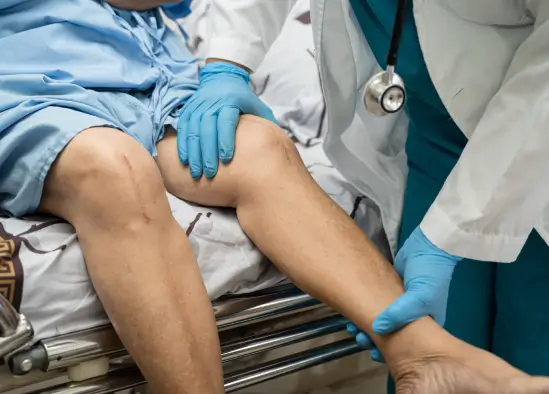
For those who have been struggling with painful knees all their lives, thinking of undergoing knee replacement surgery seems like an enormous burden on them. Issues related to pain, recovery periods, mobility after surgery, and the effectiveness of such interventions may lead to hesitation and concern for patients. In the end, they end up suffering from unbearable pain year after year without realising that surgery might actually do them more good than harm.
What is important to understand is that nowadays, knee replacement surgery has been revolutionised and changed millions of lives of people all over the world. Thanks to the latest technologies in medicine, the surgery has become much less dangerous and more beneficial to the patients.
Therefore, if knee pain affects your life negatively, then it is high time to learn everything about this procedure.
Understanding Knee Replacement Surgery
Replacement surgery of the knee, which is sometimes referred to as knee arthroplasty, is an operation during which the damaged or worn parts of the knee joint are replaced with man-made components for the purpose of ensuring smoother movement of the joint.
The surgery becomes necessary in cases where conservative approaches do not work well enough. The main objective of the knee replacement surgery is not just joint replacement but rather mobility restoration.
Who May Need Knee Replacement Surgery?
Surgery is not always required for patients experiencing knee pain. In some cases, however, the deterioration of the knee joint might lead to knee replacement surgery.
The need for knee replacement can arise due to the following symptoms:
Persistent Knee Pain
Knee pain that cannot be alleviated with medication or physical therapy indicates the possibility of severe deterioration of the joint.
Severe Osteoarthritis
By far the most common cause of knee replacement is osteoarthritis. This condition involves the gradual destruction of joint cartilage and subsequent bone-on-bone friction.
Challenging Everyday Tasks
Activities such as walking, climbing stairs, sitting down from a sitting position, and even standing can become problematic, thus necessitating surgery.
Increased Joint Stiffness
If limited mobility is accompanied by increased stiffness, this suggests a serious state of knee joint degeneration.
Decreased Quality of Life
Knee problems affecting the ability to move freely and engage in daily activities can become so severe that surgery might be a solution.
Common Myths About Knee Replacement Surgery
Although the procedure is highly effective, there remain a number of false beliefs about knee replacement. Getting acquainted with the facts surrounding these misconceptions is important as it may help in gaining confidence in the procedure.
Misconception #1: Knee Replacement Is Suitable for the Elderly
Fact— The operation is commonly performed on elderly people; however, it is not determined by age only. In fact, many people who need to replace their knees are in their fifties and sixties.
Age is not the only criteria; the pain intensity, joint status, and general well-being determine whether or not the procedure can be carried out.
Misconception #2: It Is a Highly Painful Procedure
Fact— Pain is one of the most frightening factors about surgeries; however, the use of advanced anaesthesia, new methods of pain relief, and modern technologies makes the process less traumatic for the body.
The majority of patients say that the pain they had due to arthritis before the procedure was much more unpleasant than the postoperative pain.
Misconception #3: The Patient Can Fully Recover after Several Years
Fact— Every patient will recover differently, however, thanks to advanced medical treatments, it will be possible for you to get up and walk much sooner than most people expect.
It is quite common to begin walking with support as soon as one day after surgery, and gradually return to everyday activities in the coming weeks and months.
Myth 4: Artificial Knees Do Not Last Long
Fact— With good maintenance and care, artificial knees are made to last a long time. Most will perform well for 15 or 20 years or more.
Myth 5: You Will Not Live an Active Life Anymore
Fact— Replacement of the knee joint allows for the resumption of mobility and improved functionality. Walking, stair climbing, traveling, and physical exercise become much easier with the help of a knee implant.
How Modern Knee Replacement Techniques Have Improved Outcomes
Orthopaedic surgery has come a long way in the past decade. The current procedures do not only address the problem of replacement but also consider other aspects such as patient comfort, surgical accuracy, and mobility.
Increased Precision of Surgery
Through advanced planning tools, surgeons can align and position artificial joints correctly, ensuring good performance and increased longevity.
More Functional Implants
Current implants mimic the natural knee function as much as possible to provide comfort and increased freedom of movement.
Increased Efforts to Manage Patient Pain
Multimodal pain management techniques are being used to control pain during the postoperative period and avoid potent drugs.
Earlier Mobilisation
Patients are encouraged to start moving as soon as possible to increase their mobility.
Shorter Hospital Stay
Many people are now able to go home after undergoing surgery.
What to Expect During Recovery
One of the most frequently asked questions among the patients is, "What will be the duration of recovery?"
Every patient undergoes a unique recovery process, but some knowledge about how the overall process works may help patients prepare themselves better.
The First Few Days
After the procedure, a patient is advised to begin his/her movement under the guidance of the doctor. Usually, one begins to walk with support in 24 hours depending on his/her health condition.
Pain and swelling are controlled with the help of medications, physical therapy and exercises.
The First Few Weeks
At this stage, physical therapy becomes crucial for the process of recovery. One is supposed to perform exercises aimed at knee joint flexion improvement, strengthening of adjacent muscles and normalisation of movements.
Walking distance and other activities are gradually increased according to the rehabilitation program prescribed by doctors.
The First Few Months
Most patients experience positive changes concerning pain relief and movement capability. Daily activities become more accessible for patients; one starts feeling more confident in his/her movements.
Long-Term Recovery
Full recovery can take several months depending on age, general health, and dedication to rehabilitation. Patients generally see marked improvement in comfort, mobility, and quality of life.
Tips for a Successful Recovery
A successful recovery process will not only be dependent on the procedure.
There are several key things to consider, including:
- Stick to your physiotherapy regime.
- Remain physically active within advised boundaries.
- Keep a healthy body mass.
- Visit all follow-ups.
- Adhere to medical and rehabilitative advice.
- Do not engage in activities that put excessive strain on the new joint.
Those who take an active role in their recovery tend to have more success.
The Benefits of Knee Replacement Surgery
The results for people with severe cases of knee arthritis or joint damage can be life-changing if they opt for knee replacement.
This is because:
- Chronic knee pain can be greatly reduced
- Mobility and flexibility improved
- Balance and stability enhanced
- Independence increased when performing everyday tasks
- Sleeping problems alleviated
- Movement more confident
- General quality of life improved
Often, patients will discover that activities once avoided due to pain are now possible again.
Final Thoughts
Having to endure chronic knee pain can disrupt all aspects of one’s life, whether it be physical activities or psychological well-being. Even though the risks associated with surgical operations can be a concern, knee surgeries today have proven themselves very successful in addressing issues related to the deterioration of the joints.
It is vital to get acquainted with all the facts in order to make an educated decision when it comes to your health. If you have chronic knee pain which prevents you from leading a full and active life, you should visit an orthopaedic surgeon in order to find out more about your situation.
With appropriate treatment and timely intervention, many people today are recovering from their conditions and regaining their health and mobility.
Comments
test